
Stormwater Modeling with Roots in Texas
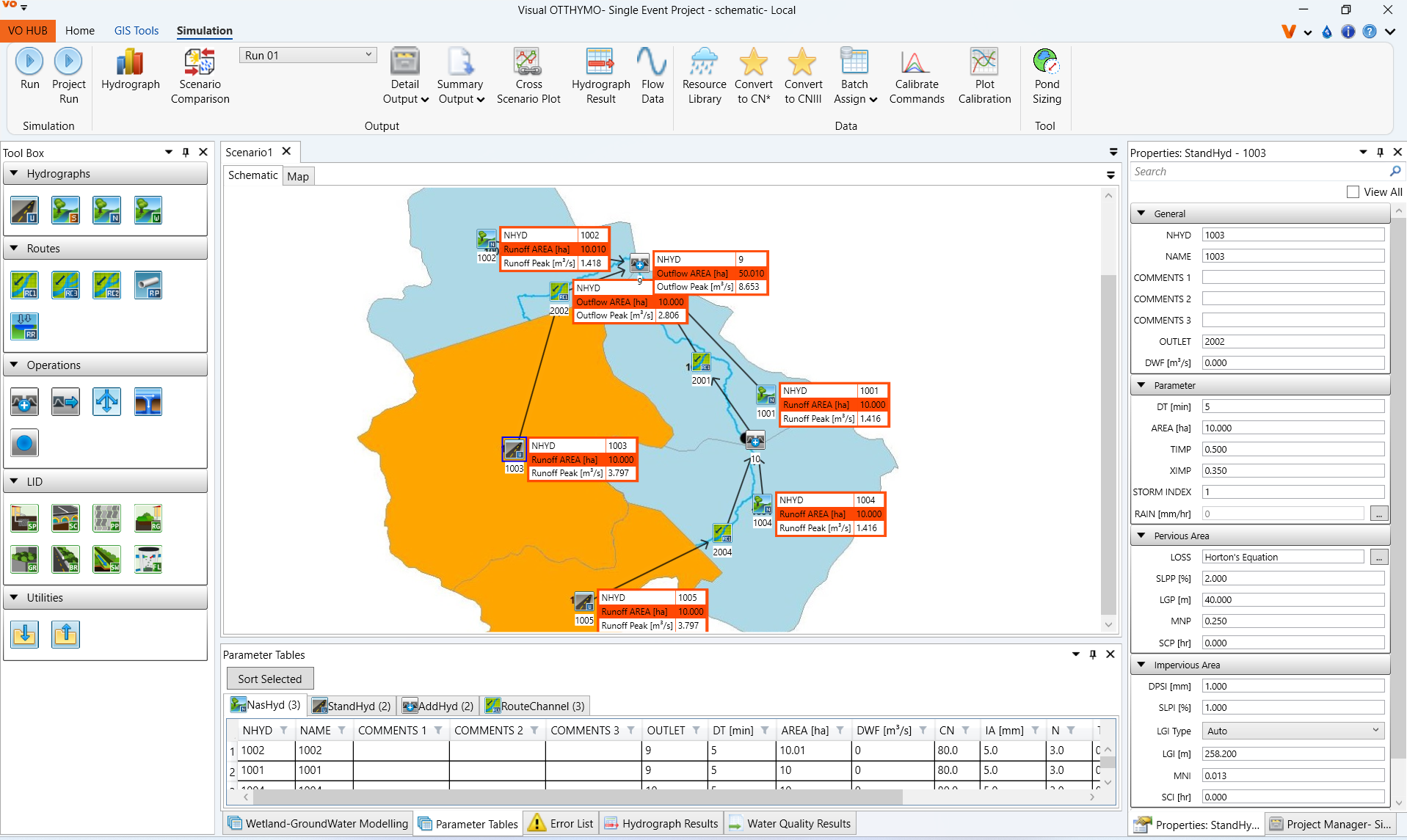
VO brings watershed hydrology, stormwater management, urban drainage, and SWMM-based hydraulic modeling together in one visual platform.
Flow at ADDHYD
Channel Pond Combined
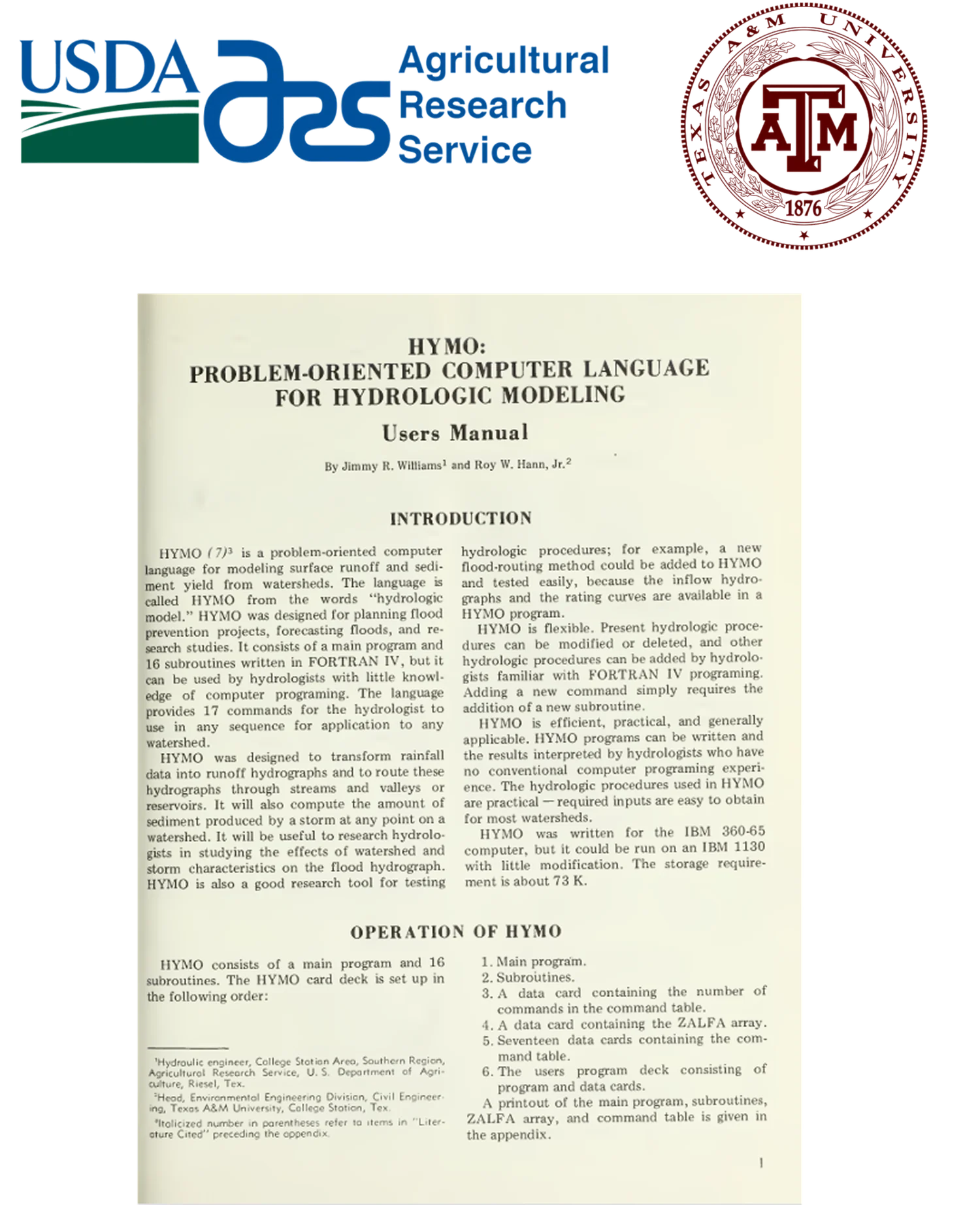
From HYMO’s Texas Roots to Today’s VO
HYMO was developed in 1973 by Jimmy R. Williams and Roy W. Hann Jr. through the USDA Agricultural Research Service in cooperation with Texas A&M University.
Over the following decades, that hydrologic modeling foundation developed through OTTHYMO and Visual OTTHYMO into VO, a modern platform combining watershed hydrology with SWMM-based hydraulic modeling.
Explore the History of VO →One Platform. Two Modeling Engines.
Watershed Hydrology and Stormwater Planning
Hydrologic modeling for watersheds, land development, and stormwater management.
- Rainfall-runoff modeling
- Watershed and land-development studies
- Detention and stormwater management
- Continuous simulation
- Water balance and environmental analysis
Urban Drainage and Hydraulic Modeling
Hydraulic modeling for storm sewer systems, surface drainage, and flood analysis.

- Storm sewer networks
- Dynamic wave routing
- Dual drainage
- Hydraulic grade lines and surcharge
- Surface drainage and flood analysis
Apply VO to the Work Your Team Already Does
Land Development
Compare existing and proposed runoff, detention, and drainage conditions.
Watershed Studies
Build rainfall-runoff models, route hydrographs, and evaluate watershed response.
Urban Drainage
Model storm sewers, channels, culverts, storage, inlets, and surface drainage.
Flood Analysis
Evaluate surcharge, ponding, surface flow, and drainage-system performance.
Your Data. Your Units. Your Project Requirements.
VO supports imperial and metric projects and allows engineers to work with project rainfall, terrain, GIS, and infrastructure data.
See VO in Action
See how VO makes it easier to build, configure, run, and understand hydrologic and hydraulic models.
Developed Through Decades of Engineering Use
VO is used by consultants, public agencies, regulators, and universities for watershed studies, stormwater design, infrastructure planning, and model review.
“We have used the VO software for stormwater management design, subdivision planning and site plan design. While we have also used other HYMO-based software programs, we have found using Visual OTTHYMO (VO) is EASY.”
“Our users are Water Resources Engineers, and the software is used to review digital VO models submitted in support of development applications. As HYMO users who started off with other software, the interface of VO is a lot more user-friendly.”
Frequently Asked Questions
Quick answers about using VO in Texas, model review, and booking a demo.
Is VO designed for use in Texas?
VO can be used with imperial units and project-specific rainfall, terrain, GIS, and infrastructure data. Engineers should configure each model according to the criteria and methods required by the relevant Texas agency or jurisdiction.
Is VO approved by Texas regulators?
Texas does not have one statewide software-approval standard for every stormwater project. Requirements vary by agency and jurisdiction. Project teams should confirm the accepted methods, software, and submission requirements for each project.
Can public agencies review models submitted in VO?
Yes. Smart City Water can work with regulators and public agencies that need to review VO models submitted in support of development applications, drainage studies, or other engineering work. Review access and support can be arranged based on the agency’s needs, expected use, and the circumstances of the project. Agencies interested in evaluating VO for model review can contact our team to discuss available options.
Does VO support imperial units?
Yes. VO allows engineers to work in imperial or metric units based on the project and jurisdiction.
What is VO’s connection to Texas?
VO traces part of its hydrologic foundation to HYMO, developed in 1973 by Jimmy R. Williams and Roy W. Hann Jr. through the USDA Agricultural Research Service in cooperation with Texas A&M University. HYMO later developed through OTTHYMO and Visual OTTHYMO into today’s VO platform.
What is the difference between VO OTTHYMO and VO SWMM?
VO OTTHYMO focuses on watershed hydrology, rainfall-runoff analysis, stormwater management, continuous simulation, and environmental modeling. VO SWMM focuses on storm sewers, urban drainage, dual drainage, hydraulic performance, surcharge, and flooding.
Can the demonstration focus on a project?
Yes. Tell us whether your work involves land development, watershed studies, storm sewer systems, drainage assessments, or flooding. We can focus the demonstration on the applications most relevant to your team.
Bring Us a Project
See how VO could support a watershed, stormwater, urban drainage, or flood analysis your team already understands.
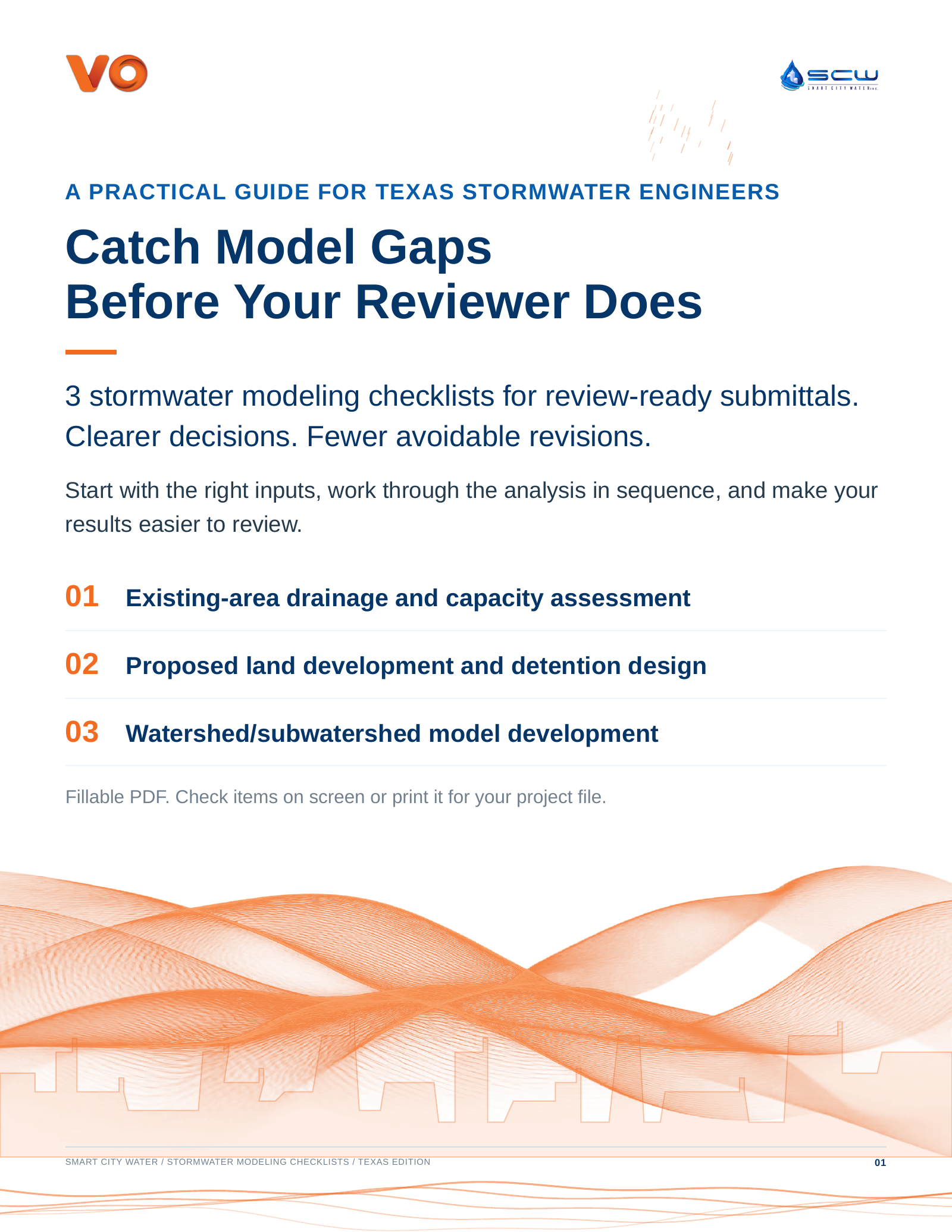
A practical check before your next drainage submittal
3 stormwater modeling checklists. 7 pages, fillable or printable.